
Van Dusen Capital
Retirement Without Market Risk
Building Income Without Relying on Market Volatility
For decades, retirement planning has been built on one assumption: invest in the market, accept volatility, and rely on long-term growth. But that approach comes with a hidden risk—losses at the wrong time can permanently impact retirement income.
This creates a critical question: what if your retirement strategy didn’t depend entirely on market performance? What if your income plan could continue without being disrupted by downturns?
Understanding how to reduce or eliminate market risk is one of the most important shifts in modern financial planning.
Common Questions About Retirement Without Market Risk
Can you eliminate market risk completely?
You can reduce dependence on market performance, but most strategies combine multiple approaches.
Is this better than investing?
It serves a different role. Many people use both strategies together.
Who is this for?
People who want more control, stability, and predictable income in retirement.
Build a More Stable Retirement Strategy
Call or Text 1-618-767-0570 Schedule Strategy Session Support Our EducationIMAGE PLACEHOLDER — Stable Growth vs Market Volatility
A Different Approach: Reducing Market Dependence
Instead of relying entirely on market-based accounts, some strategies are designed to reduce downside exposure while still allowing growth.
One key feature is downside protection—such as a 0% floor—which prevents negative market crediting during downturns.
Market vs Stability Comparison
Traditional investing offers unlimited upside—but also unlimited downside. A protected strategy trades some upside in exchange for stability and consistency.
In retirement, consistency often matters more than maximum returns.
IMAGE PLACEHOLDER — Market Loss Impact Chart
The Real Risk: Market Losses at the Wrong Time
The biggest problem in retirement planning is not volatility alone—it is when that volatility happens. Losses early in retirement can permanently damage your ability to generate income.
This is known as sequence of returns risk. If withdrawals are happening while the market is down, your portfolio is being reduced from both sides—losses and income.
Why Losses Hurt More Than Gains Help
- 10% loss → needs 11% gain to recover
- 20% loss → needs 25% gain
- 30% loss → needs 43% gain
- 50% loss → needs 100% gain
Avoiding losses is one of the most powerful ways to improve long-term outcomes. When you remove the need for recovery, your money can continue compounding forward.
A 20-Year Retirement Scenario: Stability vs Volatility
To fully understand the impact of market risk, it helps to look beyond single-year examples and examine how strategies behave over long periods of time.
Retirement is not a 1-year event—it is often a 20 to 30 year phase. Small differences in stability can compound into massive differences in outcomes.
—Scenario Setup
- Starting Portfolio: $1,000,000
- Annual Withdrawal: $60,000
- Time Horizon: 20 years
Path A — Market Volatility
The portfolio experiences normal market cycles, including two significant downturns early and mid-retirement.
- Years 1–3: -15%, -10%, +8%
- Withdrawals continue during losses
- Portfolio drops significantly before recovery begins
Even if later years produce strong returns, the damage from early losses combined with withdrawals can permanently reduce income sustainability.
—Path B — Reduced Market Risk Strategy
The strategy limits downside exposure and focuses on steady, consistent growth.
- No negative market years applied to core strategy
- Moderate gains during positive cycles
- Withdrawals do not compound losses
Over time, the smoother growth curve allows income to continue with less disruption and more predictability.
—How Retirement Income Actually Flows
One of the biggest misconceptions is that retirement income simply “comes from the account.” In reality, how income is sourced matters just as much as how much exists.
- Market accounts → withdrawals reduce principal
- Protected strategies → structured access mechanisms
- Hybrid systems → balance between both
A well-designed strategy controls where income comes from during different conditions, rather than relying on a single source.
—The Decision Framework: Is This Right for You?
Instead of asking “is this better,” a more useful question is how it fits into your overall plan.
- Do you want more predictable income?
- Are you concerned about market downturns?
- Do you value control over access to capital?
- Are you willing to trade some upside for stability?
If the answer to these questions is yes, then incorporating a strategy that reduces market risk may make sense as part of your plan.
—The Psychology of Retirement Risk
Financial decisions are not made purely on numbers—they are influenced by behavior, confidence, and perception of risk.
During market downturns, many investors react emotionally, often making decisions that negatively impact long-term outcomes.
A more stable strategy can reduce emotional decision-making by creating a more predictable experience.
—Why This Strategy Is Growing in Popularity
As more people approach retirement, the focus is shifting from aggressive growth to sustainability and income reliability.
Market volatility, economic uncertainty, and longer life expectancy are all driving interest in strategies that provide more control.
This shift is not temporary—it reflects a broader change in how people think about retirement planning.
IMAGE PLACEHOLDER — 20-Year Stability vs Volatility Comparison Chart
Advanced Retirement Strategy: Building Income Buckets Without Market Panic
A strong retirement strategy does not depend on one account, one market condition, or one withdrawal method. It uses different “buckets” of money for different purposes. This helps reduce pressure during downturns and gives the strategy more flexibility over time.
The problem with relying only on market-based retirement accounts is that every withdrawal is tied to market timing. If the market is down and income still needs to be taken, the account may be forced to sell assets at a loss. That is where long-term damage begins.
The Three-Bucket Retirement Income Model
- Bucket 1 — Short-Term Liquidity: Cash or highly liquid funds for emergencies, short-term needs, and immediate flexibility.
- Bucket 2 — Protected Capital: Strategies designed to reduce downside exposure and create more stable access to capital.
- Bucket 3 — Growth Assets: Market-based investments used for long-term appreciation and higher upside potential.
The purpose of this structure is not to avoid growth. It is to avoid being forced to rely on growth assets at the worst possible time. When each bucket has a role, the retirement plan becomes more resilient.
How Protected Capital Helps During Market Downturns
When markets decline, retirees often face a difficult decision: keep withdrawing from a shrinking account, reduce income, or wait for recovery. None of those choices are ideal.
A protected capital strategy can help create another source of access. Instead of selling market assets during downturns, the retiree may be able to draw from a more stable component while allowing market-based assets time to recover.
This is where strategy design matters. The goal is not simply to own a product. The goal is to build a coordinated system where income, protection, liquidity, and long-term growth all work together.
Example: Market Downturn Income Decision
Imagine a retiree needs $60,000 of annual income and the market drops 25% during the first few years of retirement.
- Without protected capital: The retiree may need to sell investments while values are down, locking in losses.
- With protected capital: The retiree may have an alternate source of access, helping reduce pressure on market-based assets.
This does not guarantee a perfect outcome, but it creates more options. And in retirement, options are powerful.
How This Connects to Policy Loans
In a properly structured Indexed Universal Life strategy, policy loans may provide access to cash value without requiring the policyholder to sell market investments. This is one reason policy design matters so much.
Policy loans are not free money, and they must be managed carefully. Loans can reduce available cash value and death benefit, loan interest may apply, and poor management can create policy lapse risk. But when properly understood, they can become part of a flexible retirement income strategy.
This is also why “retirement without market risk” should not be interpreted as “retirement without planning.” The strategy must be designed, reviewed, and managed with discipline.
The Wealth Flywheel Retirement Connection
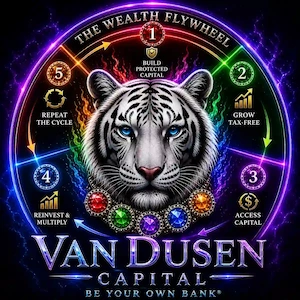
Inside The Wealth Flywheel System, retirement income planning is not treated as a separate topic. It is part of the same cycle: build protected capital, grow tax-advantaged, access capital, reinvest or reposition, and repeat with greater control.
- Build Protected Capital: Create a foundation that is not fully dependent on market performance.
- Grow Tax-Advantaged: Use indexed growth potential while reducing downside exposure.
- Access Capital: Use properly managed policy loans as part of a broader income plan.
- Reposition Strategically: Avoid selling market assets during downturns when possible.
- Repeat With Control: Keep the system flexible as retirement needs change.
Questions to Ask Before Building This Strategy
Before deciding whether this type of strategy belongs in your retirement plan, the right questions matter more than hype.
- How much of your retirement income depends directly on market performance?
- What happens if the market drops 20–30% during your first five years of retirement?
- Do you have an alternate income source that does not require selling assets during downturns?
- How important is tax-advantaged access to capital?
- Are you building a retirement plan around hope, or around structure?
These questions help shift the conversation from product selection to strategy design. That is where real planning begins.
Final Authority Takeaway
Retirement without market risk does not mean avoiding every possible risk. It means reducing dependence on one of the most unpredictable forces in retirement planning: market timing.
The strongest retirement strategies are not built on one account or one assumption. They are built on layers: protection, growth, access, flexibility, and long-term control.
That is the real goal — not just reaching retirement, but having a system that can support you through retirement.
IMAGE PLACEHOLDER — Three-Bucket Retirement Income Strategy With The Wealth Flywheel System
What Happens Over 10, 20, and 30 Years — Not Just One Year
Most people evaluate retirement strategies based on short-term performance. But retirement does not happen in one year. It unfolds over decades, and the way a strategy behaves over time is what determines whether it succeeds.
A strategy that looks strong in a single year can fail over time if it is not built to handle volatility, withdrawals, and changing conditions.
—Year 1–5: The Most Dangerous Phase
The early years of retirement are often the most critical. This is when sequence of returns risk has the greatest impact.
- Withdrawals begin
- Market volatility still exists
- Recovery time is limited
If losses occur during this phase, the portfolio may never fully recover, even if markets perform well later.
—Year 6–15: Recovery or Stabilization Phase
During the middle phase of retirement, the strategy either stabilizes or continues to weaken depending on how it handled earlier volatility.
- Stable strategies maintain income consistency
- Volatile strategies may still be recovering losses
- Income pressure continues
Year 16–30: Longevity Risk Phase
Later in retirement, the challenge shifts to longevity—making sure income continues for life.
Strategies that experienced early damage often struggle here, while more stable approaches tend to maintain consistency.
—How People Actually Use This Strategy in Retirement
One of the biggest misunderstandings is thinking this replaces everything. In reality, it is used as part of a broader strategy.
Here is how it often functions in real-world planning:
- Market accounts are used during strong market periods
- Protected capital is used during downturns
- Income is adjusted based on conditions
This creates a system where income is not forced from one source at the wrong time.
—Why “Average Returns” Don’t Tell the Full Story
Many retirement projections use average returns. But averages can be misleading.
Two portfolios with the same average return can produce very different outcomes depending on volatility and timing.
- Portfolio A: Smooth consistent returns
- Portfolio B: High volatility with large swings
Even if both average 7%, the experience—and outcome—can be drastically different.
—The Real Advantage: Flexibility Under Pressure
The biggest advantage of reducing market risk is not just protection—it is flexibility.
- You are not forced to sell during downturns
- You have options when conditions change
- You can adjust income sources strategically
This flexibility can make a significant difference over a 20–30 year retirement.
—The Difference Between Theory and Strategy
Many financial ideas sound good in theory. But what matters is how they perform under real conditions—market volatility, income needs, and long-term timelines.
A strategy that reduces market risk is not about avoiding growth. It is about structuring growth so that it can continue without being disrupted.
That difference—between theory and execution—is what determines long-term success.
IMAGE PLACEHOLDER — 30-Year Retirement Timeline Comparison
Navigate This Guide
This page covers multiple aspects of building a retirement strategy that reduces reliance on market volatility. Use the sections below to jump directly to what matters most to you.
- The Real Risk in Traditional Retirement Planning
- Why Losses Hurt More Than Gains Help
- How Stability-Based Strategies Work
- Real-Life Use Cases
- Long-Term Retirement Timeline Breakdown
- How to Decide If This Strategy Fits You
Continue Building Your Strategy
Retirement without market risk is only one part of a complete system. To fully understand how everything connects, explore the resources below.
- How Max-Funded IUL Works
- How Policy Loans Work
- Tax-Free Retirement Strategies
- The Wealth Flywheel System Explained
- IUL vs 401(k)
Before You Take the Next Step
Every strategy depends on your specific situation—your income, your timeline, your goals, and how you want your money to function.
The most effective plans are not built from general ideas—they are built from clear structure and personalized design.
If you want to see how a retirement strategy without market risk could fit into your overall plan, the next step is a structured conversation.